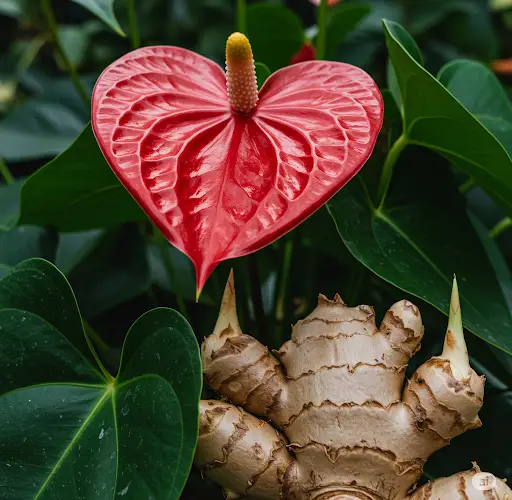
If you want to keep your plants healthy and your flowers blooming year-round, there’s a surprisingly simple and natural solution you may already have in your kitchen—ginger. Using ginger as a natural fertilizer can help your flowers thrive, encouraging continuous blooming and overall plant vitality. Here’s how a single slice of ginger can make a noticeable difference in your flower garden, particularly for plants like anthuriums.
Why Ginger Is So Effective for Plants
Ginger, often used for culinary and medicinal purposes, is also a powerful ally for plant care. It contains a variety of nutrients and beneficial compounds that promote plant health. When applied to your flowers, ginger helps in the following ways:
-
Boosts Root Health: Ginger contains compounds that stimulate the growth of healthy roots. Strong roots are the foundation for a healthy plant, as they absorb nutrients and water efficiently.
-
Rich in Antioxidants: Ginger is loaded with antioxidants, which help protect your plants from environmental stress, disease, and pests. This ensures that your plants remain strong and resistant to common issues.
-
Encourages Blooming: The natural nutrients in ginger, such as magnesium and potassium, help plants produce more flowers. These elements are vital for flower development and prolong the blooming season.
-
Promotes Growth: Ginger helps improve overall plant growth by enhancing the uptake of water and nutrients from the soil, which leads to more vibrant blooms.
How to Use Ginger for Your Plants
Using ginger in your garden doesn’t require much effort. It can be applied in various ways, depending on your preference. Below are a few simple methods to get the most out of ginger for your flowers.
Method 1: Ginger Infused Water
One of the easiest ways to use ginger for your plants is by making ginger-infused water. This method allows your plants to absorb all the beneficial compounds from the ginger while keeping things simple.
Ingredients:
-
1 slice of fresh ginger
-
1 liter of water
Instructions:
-
Slice a small piece of fresh ginger.
-
Boil the water and add the ginger slices.
-
Let the water simmer for 10-15 minutes to allow the nutrients to infuse.
-
Allow the ginger water to cool to room temperature before straining out the ginger pieces.
-
Water your plants with the ginger-infused water, ensuring the soil is well-moistened.
This ginger tea can be used once every month to give your flowers a nutrient boost. The potassium, magnesium, and antioxidants from the ginger will stimulate bloom production and promote overall plant health.
Method 2: Ginger Root in Soil
If you prefer a more direct approach, you can plant a small piece of ginger directly into the soil around your flowers. As it breaks down, it will release beneficial nutrients into the soil that support root growth and flower development.
Instructions:
-
Cut a small piece of ginger root, ensuring it has at least one eye or bud.
-
Bury the ginger piece about 2-3 inches deep in the soil around your plants, away from the main stem.
-
Cover it lightly with soil, and let the ginger break down naturally over time.
The decomposition of ginger in the soil releases nutrients like potassium, magnesium, and zinc, which encourage both root health and flower production.
Method 3: Ginger and Compost
Ginger can also be added to your compost pile to improve the overall nutrient content of your soil. When composted, ginger breaks down and releases its beneficial nutrients, which will then be absorbed by your plants.
Instructions:
-
Cut up the ginger into small pieces.
-
Add the pieces to your compost pile.
-
Mix it in with other compost materials like leaves, grass clippings, and kitchen scraps.
-
After a few weeks, the ginger will break down and enrich your compost.
This method is ideal if you want to use ginger over time, as it gradually releases nutrients into your soil.
Why Ginger Works for Anthuriums
Anthuriums, also known as flamingo flowers, are stunning houseplants that can thrive year-round with the right care. They produce vibrant red, white, or pink blooms, and with a bit of attention, they can bloom throughout the year. Ginger is particularly effective for anthuriums due to its nutrient profile.
Anthuriums require potassium to help them produce flowers and stay healthy. Potassium is one of the key nutrients in ginger, making it a perfect addition to the care of anthuriums. Ginger also promotes strong root growth, which is crucial for keeping your anthurium healthy and nourished. By incorporating ginger into your care routine, you provide the plant with the right nutrients for vibrant blooms and improved resilience.
Tips for Using Ginger Effectively
While ginger is beneficial, it’s important to apply it in moderation. Here are a few tips to ensure your plants thrive when using ginger:
-
Use Fresh Ginger: Fresh ginger is more potent and has a higher concentration of nutrients than dried ginger. Always use fresh ginger when applying it to your plants.
-
Don’t Overdo It: While ginger is great for your plants, too much of it can cause imbalances. Stick to using it once a month to avoid overwhelming the plant with too many nutrients.
-
Monitor Your Plant’s Response: After applying ginger, observe your plant’s growth. If you notice improved blooming and healthier growth, continue using the ginger. If you see signs of distress, reduce the frequency of application.
-
Apply to the Roots: The most effective way to get ginger’s benefits is through the roots, as this is where most of the nutrients are absorbed. Apply the ginger near the root zone to get the best results.
Final Thoughts
If you’re looking to boost your plant’s health and encourage year-round blooms, try incorporating ginger into your care routine. Whether you choose to use ginger-infused water, plant it directly in the soil, or add it to your compost pile, this simple kitchen ingredient can work wonders for your flowers. By providing your plants with the nutrients they need, you’ll be rewarded with more vibrant blooms and a healthier, happier garden.
So, next time you have a slice of ginger left over, don’t toss it out—use it to boost your plant’s growth and watch your anthuriums and other flowers thrive all year long.


