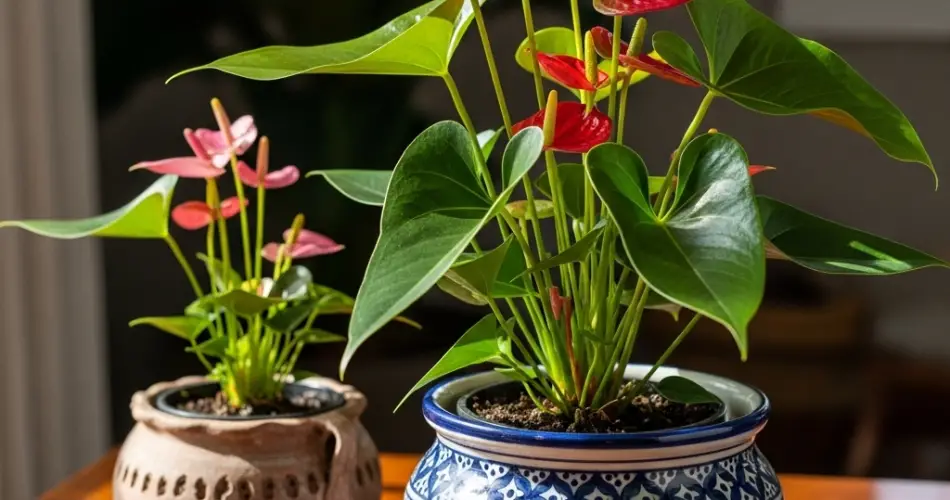
The anthurium, also known as the flamingo flower or laceleaf, is a tropical beauty known for its heart-shaped leaves and glossy, vibrant spathes. Grown indoors, this exotic plant can bloom nearly year-round when cared for properly. One of the keys to a thriving anthurium lies in choosing the right container.
While many indoor gardeners focus on watering and light, the type of pot you use can significantly influence the health, growth, and bloom production of your anthurium. Here’s a detailed guide to selecting the best indoor containers to help your anthurium plant flourish.
Why the Right Container Matters
Anthuriums are epiphytes in the wild, growing on trees and absorbing moisture and nutrients through aerial roots. Indoors, they’re typically grown in pots, which makes the choice of container critical.
Using the wrong pot—whether it’s too small, poorly draining, or made from the wrong material—can lead to root rot, stunted growth, and fewer blooms. The ideal container supports:
-
Good drainage
-
Adequate aeration
-
Root stability
-
Moisture control
1. Drainage is Non-Negotiable
Above all else, drainage holes are essential. Anthurium roots are prone to rot if left sitting in waterlogged soil. Choose a container with at least one drainage hole at the bottom to allow excess water to escape.
To boost airflow and reduce the risk of water retention, consider placing a layer of pebbles or orchid bark at the bottom of the pot.
2. Sizing: Not Too Big, Not Too Small
Anthuriums enjoy being slightly root-bound. A pot that’s too large holds more water than the plant needs, increasing the risk of soggy roots. On the other hand, a pot that’s too small will restrict root growth and may cause the plant to become unstable.
General rule: Select a pot that is 1–2 inches wider than the plant’s current root ball. Only size up when the roots begin to grow out of the drainage holes or circle the inside of the container.
3. Best Pot Materials
Terracotta/clay pots: These are breathable, allowing for better moisture control. They’re perfect for gardeners who tend to overwater, as the porous material helps wick moisture away from the soil. However, they can dry out faster, especially in warm, dry homes.
Ceramic pots (with drainage holes): These offer a sleek look and retain moisture better than terracotta, making them ideal for those who forget to water occasionally. Just ensure there’s proper drainage.
Plastic pots: Lightweight and affordable, plastic containers retain moisture longer and are less breakable—great for beginners. However, ensure they’re not too deep or completely sealed at the base.
Self-watering planters: These can work well if you tend to under- or overwater. Look for models designed for tropical plants, with proper airflow and moisture regulation features.
4. Style and Function
Aesthetic appeal is important, especially when you’re using anthuriums as indoor decor. Fortunately, anthuriums pair beautifully with a range of pot styles.
Decorative ideas:
-
White or neutral-toned ceramic pots accentuate the red or pink blooms.
-
Natural textures like rattan baskets or stone-look planters bring out the tropical vibe.
-
Minimalist concrete pots give a modern, sculptural look when paired with bold foliage.
If using a decorative cachepot (a pot with no drainage hole), always place the anthurium in a separate nursery pot inside it. This way, you can remove the inner pot for watering and let it drain fully before returning it.
5. Pot Positioning Tips
Once you’ve chosen the perfect pot, placement matters just as much.
-
Light: Place near bright, indirect light. Avoid direct sun, which can scorch the leaves.
-
Humidity: Bathrooms or kitchens are great if they get enough light—anthuriums love humidity.
-
Airflow: Avoid drafty windows or placing the pot directly next to heaters or air conditioners.
-
Elevation: Consider placing your potted anthurium on a plant stand or shelf to show off its striking leaves and blooms.
6. Repotting Guidelines
Repot your anthurium every 1–2 years or when roots outgrow the pot. Spring is the best time. Refreshing the potting mix and moving to a slightly larger pot helps reinvigorate the plant and encourages more blooms.
When repotting, gently loosen the root ball, trim off dead or mushy roots, and plant in a well-draining aroid mix (a combination of orchid bark, perlite, and peat or coco coir works well).
Final Thoughts
Choosing the right indoor container for your anthurium isn’t just about style—it directly affects the plant’s health and performance. A pot with good drainage, the right size, and breathable materials will support healthy roots, vibrant leaves, and long-lasting blooms.
With the right pot and care routine, your anthurium will reward you with an impressive display of color and lush foliage—perfect for brightening any indoor space.


