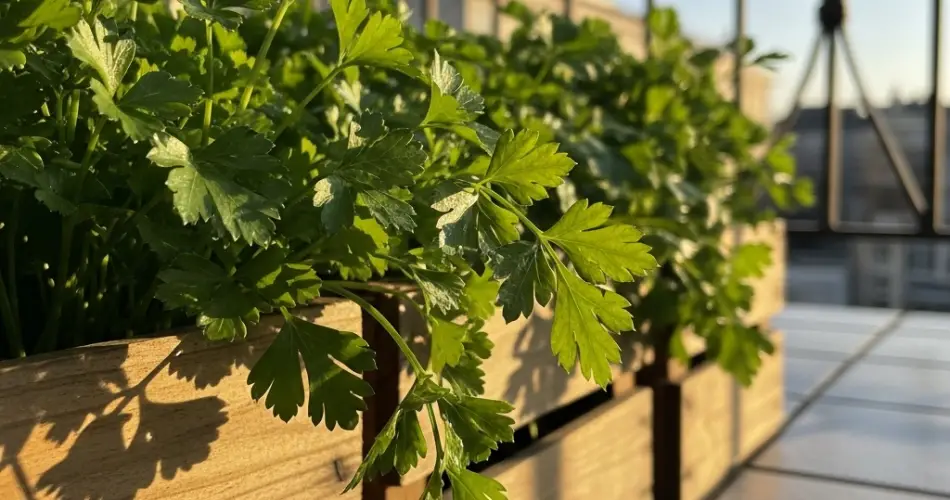
Parsley (Petroselinum crispum) is a versatile herb that adds vibrant flavor to a wide range of dishes, from soups and salads to sauces and garnishes. Its fresh, crisp leaves are rich in nutrients, including vitamins A, C, and K, making it a healthy addition to your diet. Growing parsley in a balcony crate garden is an ideal solution for urban gardeners or anyone with limited outdoor space. This approach combines practicality, sustainability, and convenience, keeping fresh herbs within easy reach at all times.
Crate gardening allows you to maximize balcony space while providing parsley with the ideal growing conditions it needs to thrive. Wooden or plastic crates are inexpensive, lightweight, and easy to move, making them perfect for small-space gardening.
Choosing Crates and Preparing the Balcony
Select a sturdy crate that can hold soil and retain moisture without warping. Wooden fruit or vegetable crates work well, while plastic crates provide durability and ease of cleaning. Ensure the crate has adequate drainage by drilling small holes at the bottom to prevent waterlogging, which can harm parsley roots.
Position your crate in a balcony location that receives at least 4–6 hours of sunlight daily. Parsley grows best in full sun but tolerates partial shade, especially in hotter climates. Placing the crate on a railing, balcony floor, or plant stand can provide optimal sunlight exposure and make harvesting easier.
Preparing Soil for Parsley
Parsley thrives in fertile, well-draining soil. Use a high-quality potting mix enriched with compost or organic fertilizer to supply the nutrients needed for healthy growth. Avoid heavy garden soil that may compact in the crate and restrict root development.
Add a layer of small stones or gravel at the bottom of the crate to improve drainage and prevent water from pooling. Fill the crate with potting mix, leaving a small gap at the top for watering and mulching. This setup ensures strong root growth and lush, flavorful foliage.
Planting Parsley
Parsley can be grown from seeds or young plants:
-
From seeds: Sow seeds about 0.5–1 cm deep. Keep the soil consistently moist until they germinate, usually within 10–14 days. Thin seedlings to avoid overcrowding and encourage healthy growth.
-
From nursery plants: Transplant small plants into the crate, spacing them adequately to allow airflow and prevent competition for nutrients. Firm the soil around the roots and water thoroughly to help the plants establish.
Watering and Maintenance
Parsley prefers evenly moist soil. Water when the top 2–3 cm of soil feels dry, ensuring that excess water can drain freely. Crates can dry out quickly, particularly in hot weather, so monitor moisture levels regularly.
Mulching the soil with a thin layer of compost or organic material helps retain moisture, suppress weeds, and regulate soil temperature. Avoid overwatering the foliage to reduce the risk of fungal diseases.
Fertilizing Your Crate Garden
Container-grown parsley benefits from regular feeding, as nutrients in the soil are used quickly. Apply a balanced liquid fertilizer every 3–4 weeks or incorporate slow-release organic fertilizer into the soil at planting.
Organic options such as compost tea or fish emulsion enhance the flavor of parsley and encourage strong, leafy growth. Avoid excessive nitrogen, which can promote leaf growth at the expense of flavor concentration.
Harvesting Parsley
Parsley is ready to harvest once the leaves are large enough to use, typically 8–10 weeks after planting. Cut outer leaves near the base, leaving inner leaves intact to encourage continued growth.
Regular harvesting promotes bushier plants and a continuous supply of fresh leaves. Fresh parsley can be used immediately or stored in the refrigerator for several days.
Additional Tips for a Healthy Balcony Crate Garden
-
Rotate the crate occasionally to ensure even sunlight exposure.
-
Remove yellow or damaged leaves to maintain plant health.
-
Monitor for pests such as aphids and caterpillars, and treat using natural methods.
-
Consider companion planting with herbs like chives or thyme to maximize space and deter pests.
Final Thoughts
A balcony parsley crate garden is a practical, sustainable way to grow fresh, flavorful herbs at home. Crates provide excellent drainage, space efficiency, and mobility, making them ideal for small outdoor spaces.
With well-prepared soil, consistent watering, sufficient sunlight, and regular harvesting, your parsley plants will thrive, offering a steady supply of vibrant leaves for culinary use. This small-scale gardening approach transforms a balcony into a productive, green oasis, ensuring fresh herbs are always at your fingertips.


