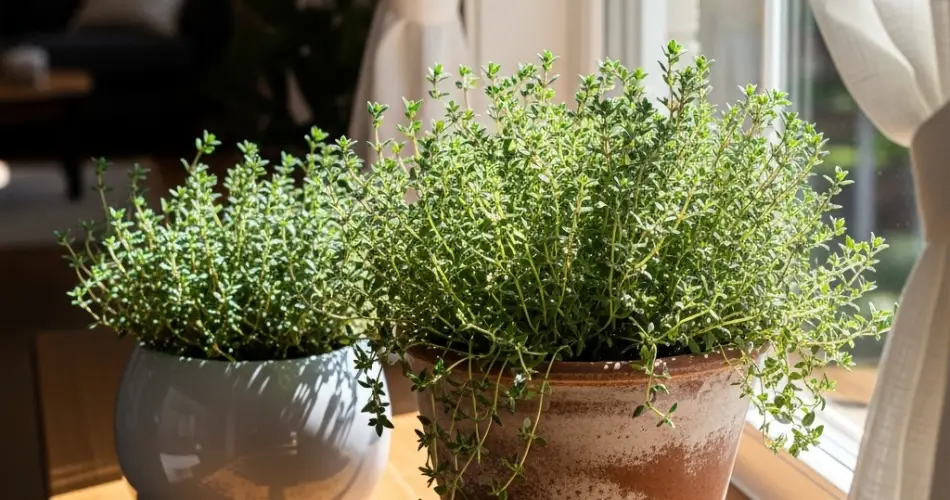
Thyme is one of the most beloved Mediterranean herbs, known for its delicate fragrance, tiny leaves, and powerful flavor. Whether sprinkled fresh on roasted vegetables, added to soups, or infused into oils, thyme brings a warm, earthy depth to cooking. The good news is that you don’t need a garden bed to enjoy this versatile herb. With just a few pots and a sunny balcony, you can grow thriving thyme plants right at home.
This guide explores the essentials of growing thyme in containers, from choosing the right variety and soil to providing proper care throughout the seasons.
Why Grow Thyme in Pots?
Balcony gardening offers a unique opportunity to grow fresh herbs even in urban environments. Thyme is particularly well-suited for container gardening because:
-
Compact growth habit: Thyme stays small and bushy, making it ideal for pots.
-
Low maintenance: This herb tolerates drought and poor soils, requiring little upkeep.
-
Decorative charm: Thyme’s fine leaves and clusters of tiny purple or pink flowers bring ornamental beauty to small spaces.
-
Year-round use: Fresh leaves are available in mild climates nearly all year, and you can easily dry or freeze extras.
By keeping thyme in pots, you can move it around your balcony to chase the sun, protect it from heavy rain, or even bring it indoors during cold weather.
Choosing the Right Pot and Soil
Containers
Thyme thrives in pots that allow excellent drainage. Terra-cotta containers are ideal since they dry out more quickly, preventing the soil from staying too wet. Ensure each pot has at least one drainage hole at the bottom.
For size, select a container at least 8–10 inches wide and 6–8 inches deep. While thyme has shallow roots, it spreads outward, so a wider pot gives it room to grow.
Soil
Thyme prefers light, sandy, well-draining soil. Standard potting mixes can be improved by blending in coarse sand, perlite, or small gravel. Avoid heavy soils that retain water, as thyme dislikes soggy roots.
A soil mix ratio that works well is:
-
2 parts potting soil
-
1 part sand or perlite
-
1 part compost
This blend ensures both nutrition and excellent drainage.
Planting Thyme
You can start thyme from seeds, cuttings, or young nursery plants.
-
Seeds: Sow them lightly on the soil surface without burying deeply, as they need light to germinate. Keep the soil moist until seedlings appear, usually within 2–3 weeks.
-
Cuttings: Take a 3–4 inch cutting from an established thyme plant, strip the lower leaves, and place it in moist soil. Within a few weeks, roots will form.
-
Nursery plants: The quickest method is to buy a small thyme plant and repot it into your container.
After planting, place the pot in a sunny spot on your balcony and water lightly.
Sunlight and Watering Needs
Thyme is a sun-loving herb. For best growth, give your plant at least 6–8 hours of direct sunlight daily. On a balcony, choose the brightest location—south-facing spaces are ideal.
Water sparingly, allowing the soil to dry between waterings. Overwatering is the most common mistake with thyme. Stick your finger into the soil; if the top inch feels dry, it’s time to water. In hot summer months, you may water more frequently, but always avoid soggy conditions.
Caring for Thyme Throughout the Seasons
-
Fertilizing: Thyme does not need heavy feeding. A light application of liquid fertilizer or diluted compost tea once a month during the growing season is sufficient. Too much fertilizer will reduce the aromatic oils that give thyme its flavor.
-
Pruning: Regularly pinch back stems to encourage bushy growth. After flowering, trim the plant lightly to prevent it from becoming woody.
-
Overwintering: In colder regions, bring pots indoors to a sunny windowsill before frost arrives. If left outdoors, insulate containers with burlap or bubble wrap to protect the roots.
Harvesting and Using Thyme
You can begin harvesting thyme once the plant is established and has plenty of stems. Snip sprigs with clean scissors, taking care not to remove more than one-third of the plant at a time.
Fresh thyme can be used right away in cooking, or you can preserve it by drying. To dry thyme, tie small bundles of stems and hang them upside down in a dry, airy spot. Once dry, strip the leaves and store them in airtight jars.
Frozen thyme is another option: chop fresh leaves, place them in ice cube trays with a little water or olive oil, and store in the freezer for later use.
Decorative Ideas for Balcony Thyme
Thyme is not just practical—it also makes a beautiful decorative plant. You can:
-
Plant thyme in long rectangular balcony boxes for a lush green edge.
-
Mix thyme with other Mediterranean herbs like rosemary, sage, and oregano for a fragrant container garden.
-
Use trailing varieties of thyme in hanging pots for a cascading effect.
Final Thoughts
Growing thyme on your balcony in pots is both rewarding and practical. This aromatic herb thrives with little care, needing only sun, well-drained soil, and occasional watering. Its fragrant leaves enhance countless dishes, while its charming appearance adds beauty to small spaces.
Whether you are an experienced gardener or a beginner with limited space, thyme proves that even a tiny balcony can yield flavor, fragrance, and joy. With just a few pots, you’ll always have fresh thyme at your fingertips.


