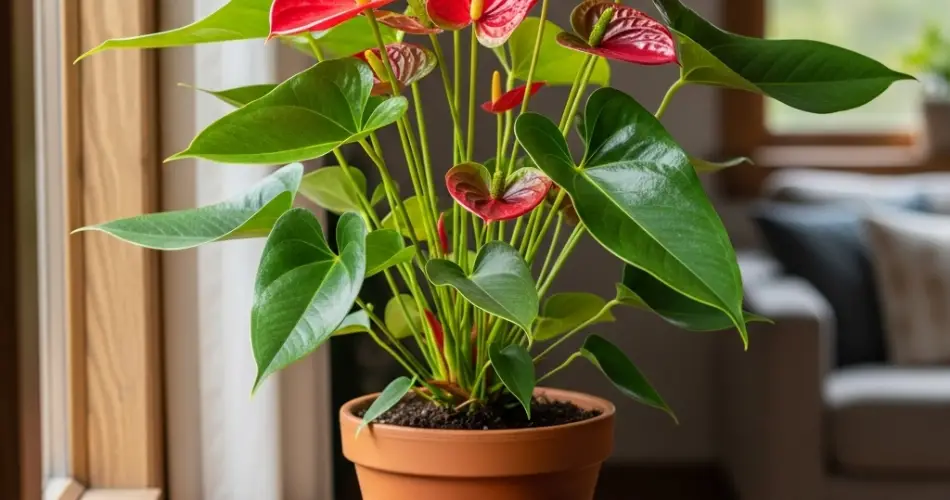
Anthuriums are some of the most striking indoor plants you can grow in containers. With their glossy, heart-shaped leaves and bold, long-lasting blooms in shades of red, pink, white, or purple, these tropical plants can instantly elevate any indoor space. Whether you’re decorating a modern apartment or adding color to your home office, anthuriums make a statement.
Growing anthuriums in pots is ideal for people who want to enjoy their beauty year-round, regardless of outdoor weather. This article covers everything you need to know about caring for potted anthuriums—soil, watering, light, repotting, and more.
Why Anthuriums Make Great Potted Houseplants
Anthuriums (commonly called flamingo flowers or laceleaf plants) are native to tropical rainforests and thrive in warm, humid conditions. They adapt well to life indoors when grown in containers, making them a popular choice for indoor plant lovers.
Here are some reasons they’re so beloved:
-
Colorful blooms: The waxy, vivid spathes (often mistaken for petals) last for weeks.
-
Air purifying: Anthuriums help clean indoor air by removing toxins.
-
Compact growth: Their tidy shape suits shelves, desktops, and corners.
-
Low maintenance: When provided the right conditions, they require only moderate care.
Choosing the Right Pot
Proper pot selection is essential for healthy growth:
-
Drainage is key: Always choose pots with drainage holes to prevent root rot.
-
Material: Plastic, ceramic, or terracotta pots are all suitable, as long as they allow water to drain freely.
-
Size: Use a pot that’s just slightly larger than the root ball. Oversized pots retain too much moisture and can lead to soggy soil.
If you’re repotting, only go up one pot size at a time to avoid overwatering issues.
Best Soil for Anthuriums
Anthuriums prefer light, well-aerated soil that holds some moisture but drains quickly. A mixture that mimics their natural growing conditions (loose and rich in organic material) is ideal.
A recommended blend:
-
1 part orchid bark or coarse coconut husk
-
1 part perlite or pumice
-
1 part peat moss or coco coir
You can also use a premade aroid or orchid potting mix. Avoid heavy, compacted soils, which suffocate roots.
Light Requirements
These plants enjoy bright, indirect light. Direct sun can scorch their leaves, while too little light leads to fewer flowers and slower growth.
Best placements:
-
Near an east- or north-facing window
-
Slightly back from a south-facing window, with sheer curtains
If your plant’s foliage is fading or not flowering, try moving it to a brighter spot—but never in harsh midday sun.
Watering Tips
Anthuriums like moist—but not soggy—soil. Allow the top inch of soil to dry out between waterings.
General guide:
-
Water once a week in warmer months
-
Every 10–14 days in cooler months
Water thoroughly until it runs out the drainage holes, then empty the saucer to avoid standing water. Overwatering is a common mistake that can lead to yellowing leaves and root rot.
Temperature and Humidity
Anthuriums thrive in warm, humid environments:
-
Temperature: Ideal range is 65°F to 80°F (18°C to 27°C)
-
Humidity: Aim for 60% or higher
To boost humidity:
-
Group it with other tropical plants
-
Use a pebble tray or humidifier
-
Mist occasionally (but avoid wetting the flowers directly)
Keep the plant away from cold drafts, heaters, or air conditioners.
Fertilizing
Feed your anthurium during the active growing season (spring to early fall) with a balanced, water-soluble fertilizer diluted to half strength.
Fertilize every 6–8 weeks. Avoid over-fertilizing, as this can damage roots and reduce flowering.
Repotting and Maintenance
Repot every 2–3 years or when roots begin circling the pot or emerging from drainage holes.
Steps for repotting:
-
Remove the plant gently from its pot.
-
Shake off old soil and inspect the roots.
-
Trim away any dead or mushy roots.
-
Place in a slightly larger pot with fresh soil.
Wipe leaves occasionally with a damp cloth to remove dust and help them absorb more light.
Common Problems and Solutions
-
Brown leaf tips: Often due to low humidity or over-fertilizing.
-
Yellowing leaves: Usually caused by overwatering.
-
No blooms: Not enough light or excessive nitrogen can prevent flowering.
Anthuriums are generally pest-resistant but can occasionally attract aphids, mealybugs, or spider mites. Treat infestations with insecticidal soap or neem oil.
Final Thoughts
With the right balance of light, warmth, and moisture, anthuriums can thrive in containers and reward you with stunning foliage and exotic flowers all year round. Their tropical charm and relatively easy care make them a favorite choice for both new and experienced indoor gardeners. Whether perched on a side table or hanging in a bright corner, a potted anthurium brings color and elegance to any room.


