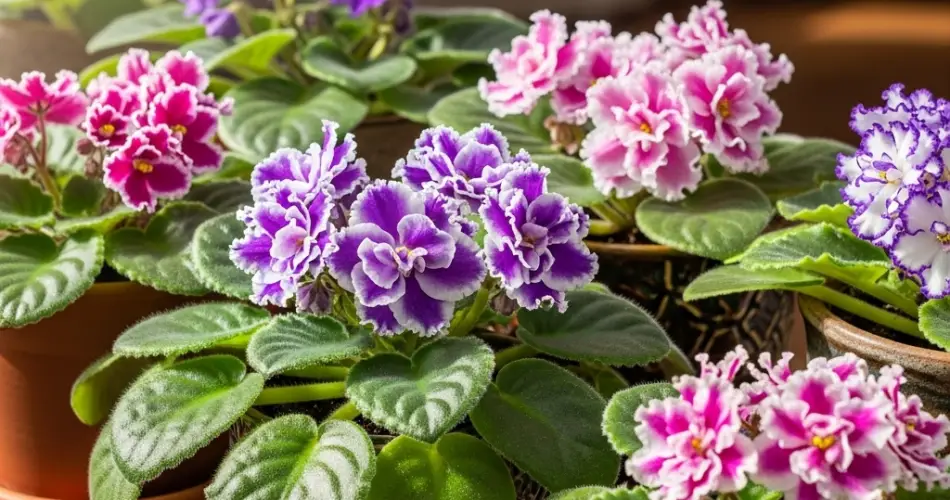
African violets are popular for their compact growth, charming blooms, and attractive foliage. However, even the most attentive indoor gardener may encounter issues like yellowing leaves and persistently dry soil. While these symptoms can be alarming, they are often easily resolved with a few adjustments in care. Understanding the underlying causes of these problems is the first step toward restoring your plant’s health and beauty.
1. Identifying the Problem: Yellow Leaves
Yellowing leaves on African violets can occur for several reasons. The key is to look at where the yellowing appears and how the plant behaves overall.
-
Lower leaves turning yellow: This is often part of the plant’s natural aging process. As long as new growth is healthy, there’s usually no cause for concern.
-
Widespread yellowing: This may indicate overwatering, poor drainage, root rot, or nutrient deficiencies.
-
Yellow patches with brown edges: This could be caused by light damage, fertilizer burn, or inconsistent watering.
Understanding the context in which the yellowing occurs will help guide the appropriate corrective action.
2. Cause and Cure: Dry Soil Issues
Dry soil can be deceptive. African violets need evenly moist, not soggy, soil. When the soil is too dry, the plant can’t absorb water or nutrients efficiently, leading to stress, yellowing leaves, or wilted growth.
Common causes of dry soil:
-
Hydrophobic potting mix: If the soil has become too dry, it may repel water rather than absorb it.
-
Improper watering technique: Watering too infrequently or allowing water to evaporate quickly can leave the soil too dry.
-
Potting mix breakdown: Over time, soil can compact and lose its ability to retain moisture.
Solutions:
-
Rehydrate the soil: Place the entire pot in a shallow bowl of room-temperature water for 20–30 minutes. This allows moisture to absorb from the bottom up and thoroughly saturates the root zone.
-
Check for root binding: If roots are tightly packed, water may not penetrate well. Consider repotting if the plant is root-bound.
-
Use the right potting mix: Choose a light, well-draining soil mix designed for African violets, often containing peat moss, perlite, and vermiculite to retain moisture without becoming soggy.
3. Watering Wisely
Overwatering and underwatering can both result in yellow leaves. African violets prefer evenly moist soil, and watering should be adjusted depending on light, temperature, and humidity levels.
-
Bottom watering is generally preferred. It minimizes leaf damage and encourages strong root development.
-
Allow the plant to soak for 20–30 minutes, then remove it from the water and let excess moisture drain.
-
Avoid letting the pot sit in water for prolonged periods, which can lead to root rot.
If you choose to water from the top, pour water directly onto the soil, avoiding contact with the leaves. Always use room-temperature water to prevent leaf spotting and cold shock.
4. Check Drainage and Pot Size
Drainage plays a crucial role in maintaining consistent soil moisture. If water collects at the bottom of the pot and cannot escape, roots may begin to rot, depriving the plant of nutrients and leading to yellowing.
-
Use pots with proper drainage holes.
-
Avoid pots that are too large, which retain too much moisture, or too small, which dry out too quickly.
-
Ensure the potting mix remains loose and doesn’t compact over time.
Repotting every 6 to 12 months not only refreshes the soil but also helps prevent mineral buildup and root congestion.
5. Light and Temperature Balance
African violets thrive in bright, indirect light. Insufficient light can lead to pale, weak leaves, while too much direct sun may scorch the foliage and cause yellow or brown patches.
-
Place your plant near an east- or north-facing window, or use fluorescent grow lights for 12–14 hours per day.
-
Maintain a stable temperature between 65–75°F (18–24°C). Avoid exposing plants to drafts, sudden changes in temperature, or cold windowsills.
Extreme temperatures can stress the plant and disrupt water absorption, contributing to dry soil and leaf discoloration.
6. Feeding and Fertilizing
Yellowing can also result from a lack of essential nutrients, particularly nitrogen, magnesium, or iron. On the other hand, overfeeding can cause root burn or leaf tip browning.
-
Use a balanced, water-soluble fertilizer designed for African violets.
-
Feed lightly, about once a month, and always water before applying fertilizer to prevent root burn.
-
If you suspect salt buildup from fertilizer, flush the soil with clean water and allow it to drain thoroughly.
7. Remove Damaged Leaves
Yellow leaves won’t recover, even after conditions improve. Gently remove them to redirect energy to healthy growth and improve the plant’s appearance. Use clean, sterilized scissors to prevent the spread of disease.
Conclusion
Yellow leaves and dry soil are common but manageable issues when growing African violets. With proper watering practices, attention to light and temperature, and the right soil conditions, you can quickly restore your plant’s vitality. Regular maintenance, observation, and minor adjustments can go a long way in keeping your African violets lush, healthy, and blooming beautifully indoors.


